Our ASPIRE programme can help you excel at Customer Care
–We see our customers as invited guests to a party, and we are the hosts. It’s our job every day to make every important aspect of the customer experience a little bit better — Jeff Bezos, Executive Chair, AMAZON
Background
Traditionally in the hospitality industry, tangibles and intangibles were key factors that influenced the customer.
- Tangibles were the physical aspects of a service that customers could see, touch, or experience directly:
- Clean, pleasant facilities and environment, food and beverages and employee appearance
- Intangibles were the non-physical elements that shape the overall guest experience and emotional connection, factors which often determine customer loyalty and satisfaction:
- Customer service quality, efficiency and convenience, guest emotions and experiences, personalisation and brand reputation
Now the term customer service has been overtaken by customer care, commonly referred to as CX (customer experience), and a whole new dynamic has developed around the business strategy of meeting, and even exceeding, customer expectations.
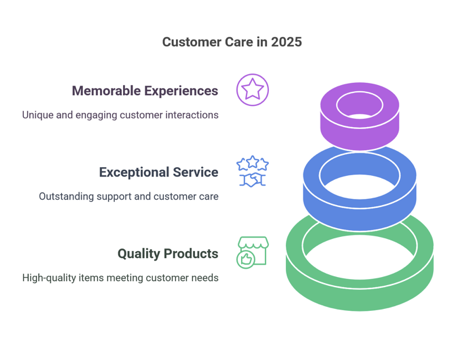
Rather than two factors it now comprises three:
- Product
- Service
- Experiences

The focus is moving more towards how the customer perceives the experience they have when interacting with a brand.
Our take on this is:
The customer will remember how you made them feel long after they have forgotten the value.
commercetools recently commissioned Foundry, a research firm, to conduct a study on the current state of CX (customer Experience) .
They interviewed over 300 business leaders across various industries, to find what’s important to customers today and the strategies they use to meet customer expectations.
Some key findings:
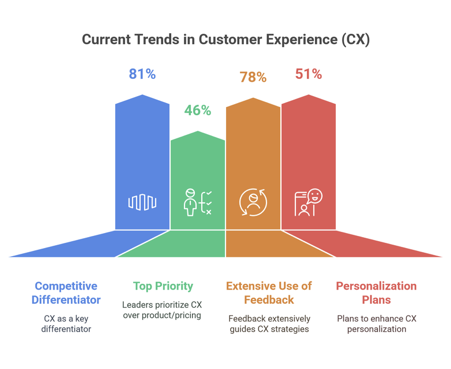
- 81% of organisations cite CX as a competitive differentiator
- 46% of business leaders cited improving customer experience as their top priority, ahead of product and pricing
- 78% of respondents said they use customer feedback “extensively” to guide their CX strategies
- 51% of business leaders said they plan to improve CX by enhancing personalisation in the next 24 months.
Customer service is not a department. It’s a philosophy that everyone in an organization must embrace– Shep Hyken
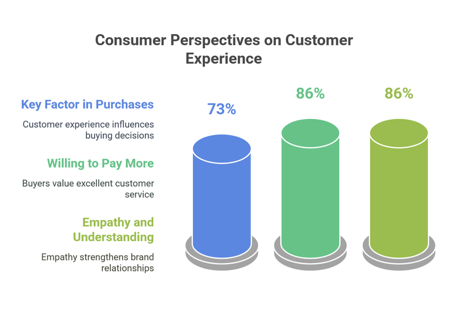
How consumers feel about customer experience today:
- 73 % of consumers point to customer experience as a key factor in their purchasing decisions
- 86%of buyers are willing to pay more for a great customer experience
- 86% of consumers say showing empathy and understanding is powerful in building a strong relationship with a brand
Harvard Business Review has found that acquiring a new customer is 5 to 7 times more expensive than retaining an existing one.
The consumer’s attitude to CX has been driven by big brands who pioneered customer loyalty as a core business strategy, recognising early on that retaining customers is far more cost-effective than acquiring new ones.
Some of the key pioneers include American Airlines, Tesco – Clubcard, Amazon, Starbucks
They have discovered the holy grail of loyalty, and these are some of the benefits:
- A 5% increase in customer retention can increase profits by 25% to 95% (Bain & Company)
- 75% of consumers say they favour companies that offer rewards (Bond Brand Loyalty)
- Loyalty program members spend 12% to 18% more per year than non-members (McKinsey & Co.)
- Amazon Prime members spend an average of $1,400 per year, compared to $600 by non-members (Consumer Intelligence Research Partners)
The benefits of loyalty are self-evident, but loyalty can’t depend on a few star performers, it is a complete team effort – and every single person on the team must be on the same customer focused sheet.
-CX is first and foremost a business strategy- Frank Down

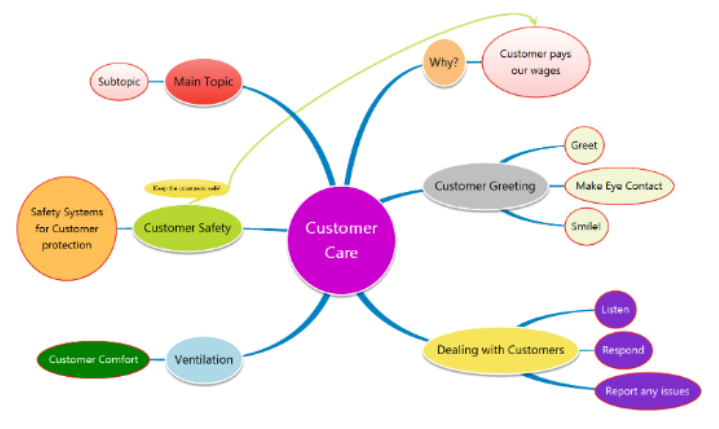
ASPIRE to CX excel
Based on this information we developed the ASPIRE model with the primary objective of helping companies to embed and nurture a culture of customer care within their organisations.
The first step on the journey to creating high levels of customer loyalty starts with management acceptance of making CX an integral part of the business strategy.
The model only works where there is complete buy-in by management who must relentlessly manage and drive the system.
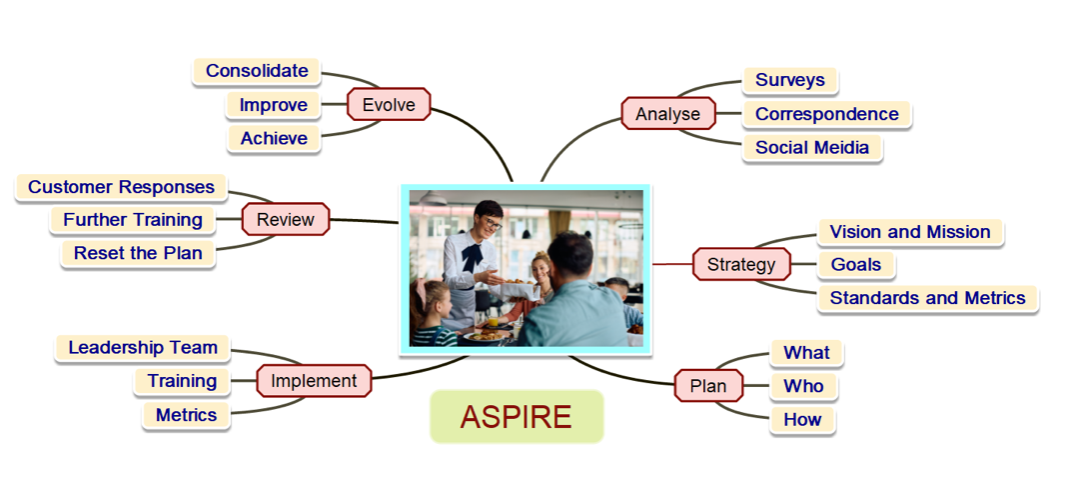
ASPIRE: Summary of the model
- Analyse – Analyse where are you now on Customer Care
- Strategy – Set out a strategy based on your Customer Care aspirations
- Plan – Develop the Customer Care Plan
- Implement – Implement your Plan for all areas of the business
- Review – Review the process and re-write or update the plan
- Evolve – Evolve and improve – moving to the next level of Customer Care